Menu Design & Trends
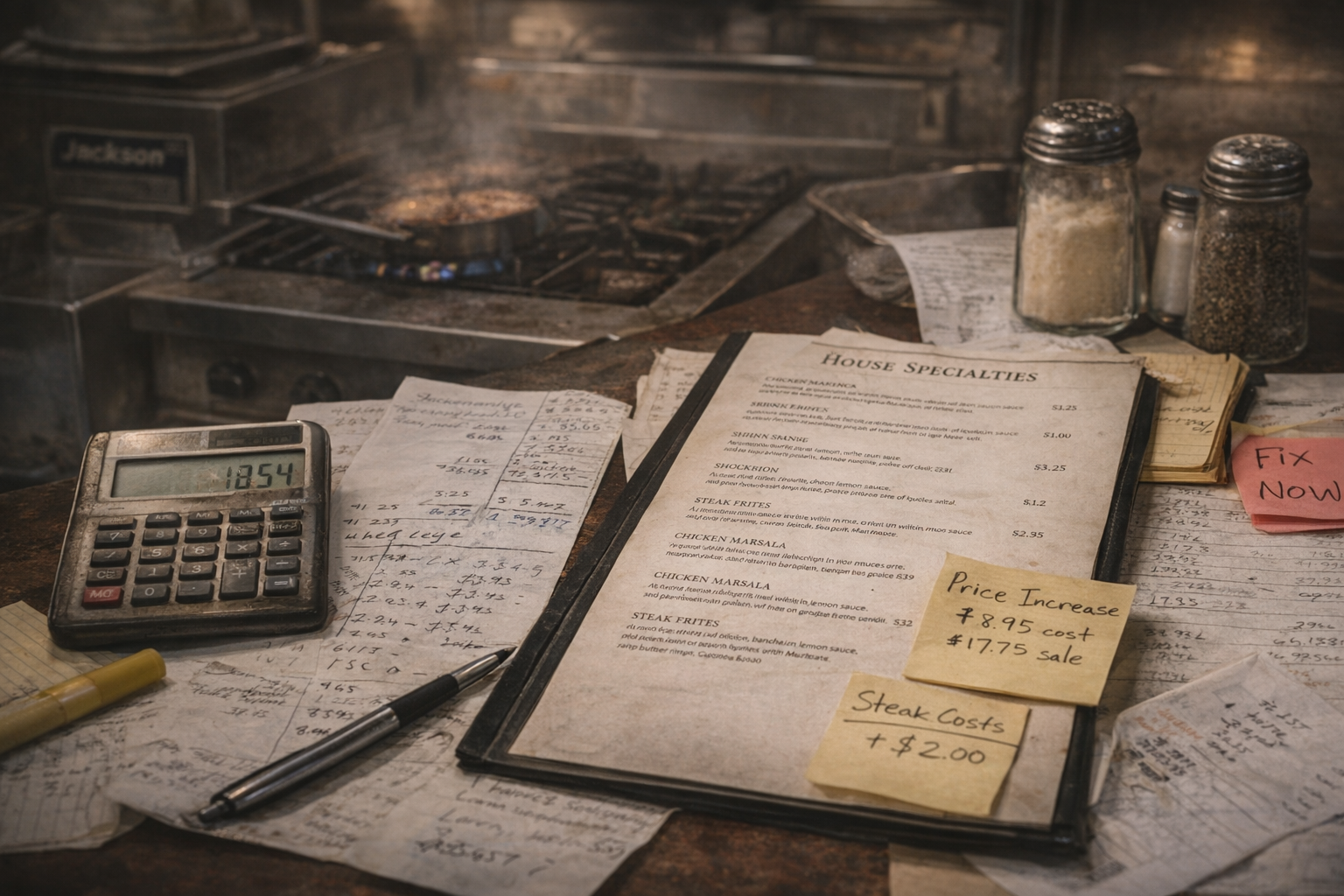
A menu is a financial document that happens to list food. Every item on it represents a bet — on your food cost, on your prep capacity, on what your customers actually want to order. Most menus aren't designed with that level of intention.
They accumulate. A dish gets added because the chef is excited about it. Another stays because it's been there since opening and nobody wants to remove it.
The specials board becomes a permanent fixture. Slowly, the menu grows past what the kitchen can execute consistently, and the food cost creeps up because nobody recosted the items that changed. These videos cover the craft and the math of building a menu — menu engineering, pricing psychology, seasonal planning, and the food trends worth paying attention to.
When the Menu Works Against You
A menu that's too big is the most common problem, and the hardest one to fix because every item has a constituency. The chef loves the braised short rib. The regulars always order the Caesar salad.
The owner's friend suggested the tuna tartare and now it can't be removed without a conversation. Meanwhile the prep team is stretched across forty items, consistency suffers, waste increases because half the mise en place for the slow sellers gets tossed at the end of the night, and the cooks are so busy keeping up that they can't execute any single dish at the level it deserves. A smaller menu is almost always a better menu.
Fewer items means better execution, lower food cost, faster ticket times, and a kitchen that can actually deliver on what it promises.
When the Menu Works Against You
A menu that's too big is the most common problem, and the hardest one to fix because every item has a constituency. The chef loves the braised short rib. The regulars always order the Caesar salad.
The owner's friend suggested the tuna tartare and now it can't be removed without a conversation. Meanwhile the prep team is stretched across forty items, consistency suffers, waste increases because half the mise en place for the slow sellers gets tossed at the end of the night, and the cooks are so busy keeping up that they can't execute any single dish at the level it deserves. A smaller menu is almost always a better menu.
Fewer items means better execution, lower food cost, faster ticket times, and a kitchen that can actually deliver on what it promises.
“A menu is a financial document that happens to list food.”
Building a Menu That Works for Everyone
124 videosVideos on menu engineering, pricing strategy, food trend analysis, concept development, and the design choices behind menus that are both profitable and compelling.
How To Design A Menu That Makes You More Money
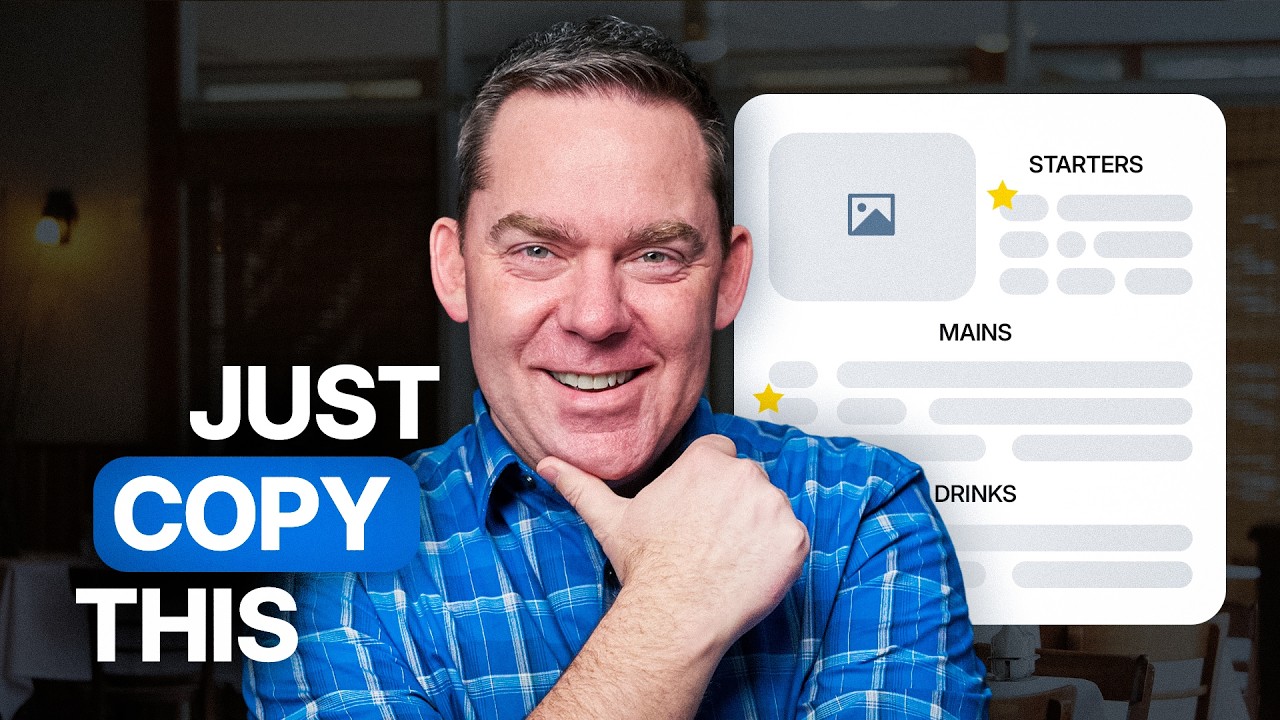
Menu psychology isn't some marketing gimmick — it's understanding how your guests' eyes move across a page, where they pause, what makes them order the 32-ounce ribeye instead of the salmon. Klose breaks down the actual mechanics: anchor pricing, visual hierarchy, the reason your highest-margin item needs to live in that upper-right sweet spot. You've printed a thousand menus, but you've probably never thought about why certain dishes move and others die. This is the difference between throwing spaghetti at the wall and actually engineering your covers.

Restaurants Secretly Control Your Choices – 8 Hidden Tricks
You spend years learning to build a menu that flows, balancing food cost against what people actually want to order, only to discover there's a whole other layer — the psychology of where their eyes land first. This breakdown of menu engineering isn't about manipulation; it's about understanding that every choice, from font weight to box placement, either works with your margins or against them. Anyone who's watched a table skip right past the high-margin appetizers knows exactly what this is worth. The craft isn't just in the kitchen.
How Restaurants Trick You In 8 Minutes
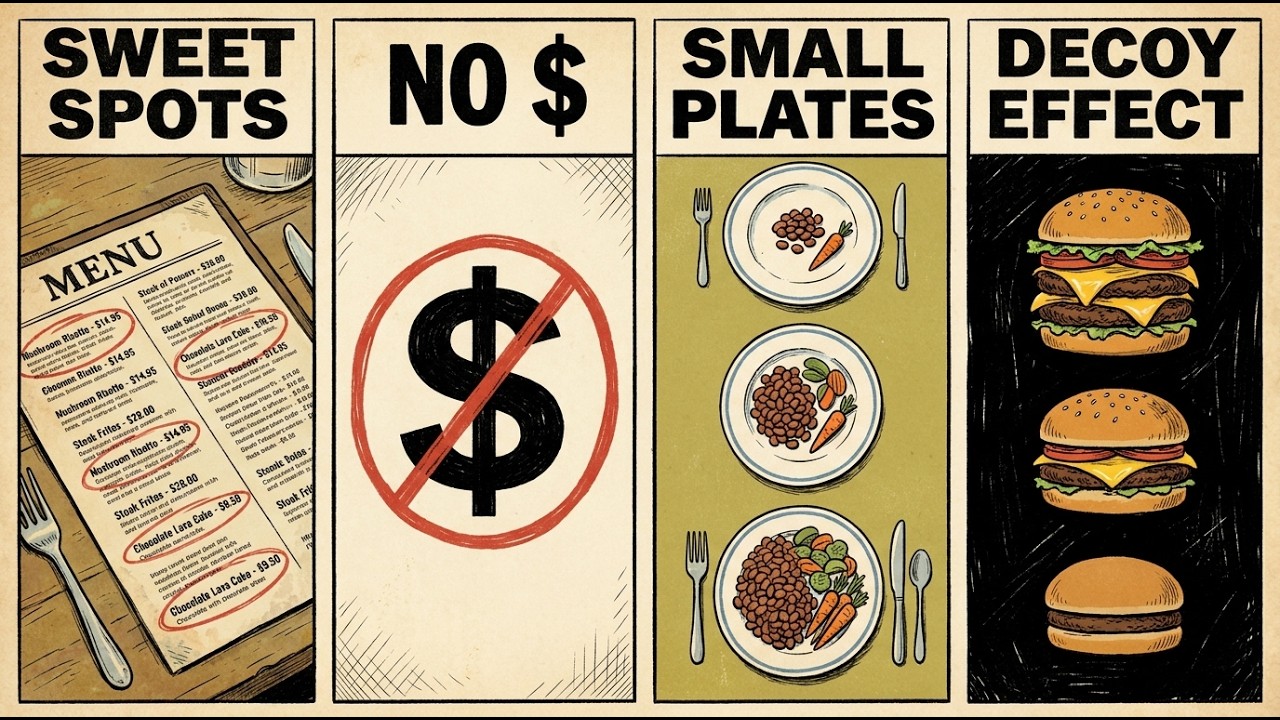
You know those servers who can upsell a $12 appetizer to a table that came in for burgers, the ones who make wine pairings sound inevitable instead of expensive? They learned from someone who understood that hospitality isn't manipulation — it's reading the room and giving people permission to enjoy themselves. The real trick isn't the menu psychology or the lighting tricks; it's the server who clocks your anniversary dinner energy and knows exactly when to mention the good bottle.

Why Most Food Truck Menus Don’t Work
Richard King breaks down why your seven-item food truck menu feels like twenty when customers can't parse it in the thirty seconds they have before the guy behind them starts getting impatient. The math is brutal and obvious once you see it: confused customers order slower, tip worse, and never come back. Every line cook who's watched tickets back up because FOH can't explain the menu knows exactly what he's talking about.
Menu Engineering Secrets
You've been staring at that menu for ten minutes, thinking you're making a choice, but the real decision was made by someone who knows exactly where your eyes land first. Allan breaks down the psychology and mathematics behind menu engineering — the calculated placement, the decoy dishes, the way a $32 entree makes the $26 option feel reasonable. Anyone who's ever wondered why their bestseller sits in that specific corner of the page needs to see this.

Menu Creation Strategy: Building Products That Wow | Andre Natera
Andre Natera breaks down menu creation like he's teaching you to read a P&L — every dish needs to justify its real estate on the board, every ingredient has to pull double duty across multiple items, and if something doesn't move in two weeks, it's dead weight dragging down your food cost. You've probably got three items right now that look good on paper but die every night at table 12. The math doesn't lie, and neither does Natera.
![🇰🇷 [Mingles] 2 MICHELIN stared Korean fine dining | South Korea - Seoul](https://i.ytimg.com/vi/siWzyZA5VgE/maxresdefault.jpg)
🇰🇷 [Mingles] 2 MICHELIN stared Korean fine dining | South Korea - Seoul
You watch Chef Kang Min-goo work the pass at Mingles and realize Netflix didn't teach you a damn thing about Korean fine dining. This is what twenty years of mise looks like — every sauce placement deliberate, every protein cooked to the gram, traditional techniques pushed through a lens that would make your French-trained chef cry. The man builds flavor bridges between ssam and foam that shouldn't work but absolutely sing. Anyone running elevated Asian in the States needs to see how real Korean fine dining moves.
How Live Fire Fuels D.C.'s Hottest Tasting Menu — Mise En Place
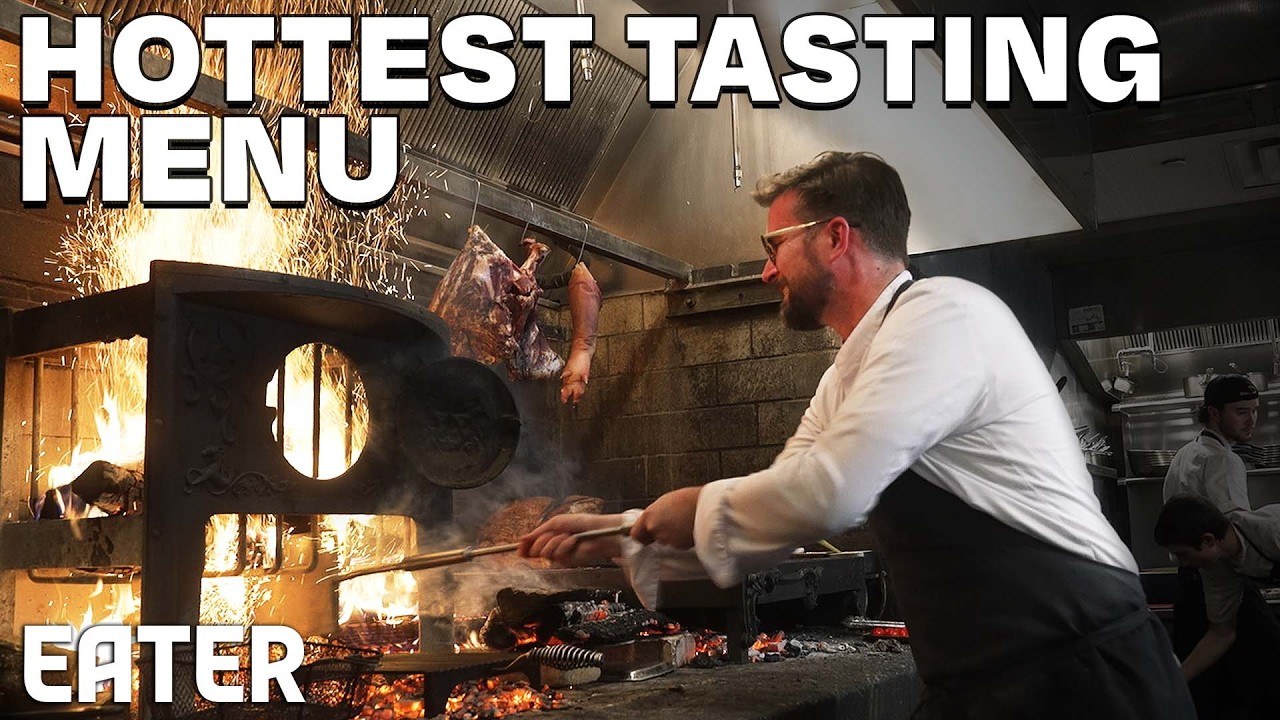
Jeremiah Langhorne built The Dabney around a wood-fired hearth because he understands what most chefs miss — live fire doesn't just cook food, it dictates your entire mise en place, your timing, your menu structure. You can't fake your way through wood cookery with gadgets and timers; the fire teaches you or it burns you. Watch him work that hearth and you'll see twenty years of burn scars and failed services condensed into movements that look effortless but cost everything to learn.
Concept Confirmation & Final Menu Engineering | Pre-Opening Planning for Hotel & Restaurant Success
Menu engineering isn't the sexy part — it's the math that keeps the lights on while you're chasing that perfect sauce consistency. This breakdown walks through concept confirmation like you're planning a military operation, because that's exactly what opening a restaurant is. You're either building systems that work when you're in the weeds at 300 covers, or you're building something pretty that dies in three months.

Busy Menu Items That Are Killing Your Profit
Every cook knows that feeling when you're cranking out the crowd-pleaser that barely breaks even while the high-margin sleeper sits untouched on the menu board. FORCS breaks down the math behind menu engineering — not just food costs, but the real labor drain of that complicated pasta dish everyone orders during the rush. You either engineer your menu or it engineers your demise.

How To Increase Sale with Perfect Menu| By Sajid Jawa
Menu engineering isn't about pretty fonts or Instagram-worthy layouts — it's about understanding the psychology of a hungry customer scanning options while their server hovers. Jawa breaks down the mechanical choices that drive order patterns: placement, pricing psychology, and the subtle art of making your highest-margin items feel inevitable. You've watched diners' eyes move across your menu a thousand times, but most operators never connect those glances to their bottom line.

3 Biggest Marketing Mistakes Restaurants Make on Social Media
You're posting blurry shots of last Tuesday's special while your competitors are booking tables through Instagram Stories. The same restaurants that can't keep their walk-in organized somehow think social media will save them — but here's the thing: your online presence runs exactly like your kitchen. Sloppy posts, inconsistent timing, and zero strategy behind the camera means you're bleeding customers the same way a broken ticket system bleeds orders.

5 Tips On Making WOW Food Menu - Cloud Kitchen - Create Restaurant Menu - Dr. Abhinav Saxena
Dr. Saxena breaks down menu architecture like someone who's actually had to make the numbers work — not just the food cost percentages, but the psychology of how a guest's eye moves down the page. You can tell he's watched operators crash on menus that looked brilliant on paper but died in execution. The cloud kitchen angle hits different when you realize these aren't just recipes, they're systems that have to scale without a front-of-house to sell the story.
![Eclipse Repino: 15-course full-tasting menu [2021]](https://i.ytimg.com/vi/O7486oRI70w/maxresdefault.jpg)
Eclipse Repino: 15-course full-tasting menu [2021]
Fifteen courses means fifteen chances to screw up, and Eclipse Repino doesn't. You can see the years in every plate — the way they build flavor through the progression, how each dish sets up the next without telegraphing where you're going. This is what happens when technique meets restraint and ego stays in the walk-in where it belongs.

World Best 3 Stars Michelin Le Louis XV - Alain Ducasse Monaco Fine Dining $454 (€414)
Watch three-star precision executed at the level where every micro-green placement matters and the cost of a single mistake could fund your prep cook's week. You're seeing what happens when technique meets resources meets the kind of obsessive refinement that only comes from decades of proving yourself worthy of charging €414 for dinner. The hands moving through each course carry the weight of Michelin expectations where "good enough" doesn't exist in any language.

Modern Korean Chef's Counter | Atomix in NYC
Jung Sik Yim and Ellia Park didn't stumble into this level of precision — you're watching two decades of technique distilled into a 10-course progression that reads like sheet music. Every plate placement, every sauce dot, every garnish tweezered into place follows rules they wrote in their bones before they ever opened on Park Avenue. This is what happens when Korean flavors meet French discipline and nobody blinks at the check average.

Fine Dining 6-Course Tasting Menu - Bữa Tối Sang Trọng 6 Món Đẳng Cấp 5 Sao
Watch someone who knows how to build a tasting menu that actually flows — each course sets up the next, palate progression mapped like stations on a line. Hai's plating is clean without the Instagram hysteria, technique solid without the show-off nonsense. You can see the years of prep work in how effortlessly everything comes together. This is what menu development looks like when you respect both the ingredients and the guest's palate.

The Psychology of the 'Naked Numeral': Why Deleting '$' Increases Sales by 8%
Your menu isn't just a list of dishes — it's a silent salesperson working every table, nudging diners toward higher checks without them realizing they've been guided. The placement of that $38 lamb shank makes the $28 salmon look reasonable, the wine list flows from sticker shock to sweet relief, and those little design tricks you thought were just making things look pretty are actually driving profit margins. Anyone who's watched customers scan a menu knows there's a pattern to how eyes move and wallets open. This breaks down the psychology behind what actually works.

World's Most LUXURIOUS Restaurant - Le Louis XV - Alain Ducasse
Three Michelin stars in Monte Carlo means every plate that leaves the pass has been touched by hands that understand the weight of expectation. You can see it in the way Ducasse's brigade moves — no wasted motion, no second-guessing, just the quiet precision that comes from years of building muscle memory around perfection. This isn't dinner service, it's a master class in what happens when technique becomes instinct.
$10 Tasting Menu with Aldi Ingredients
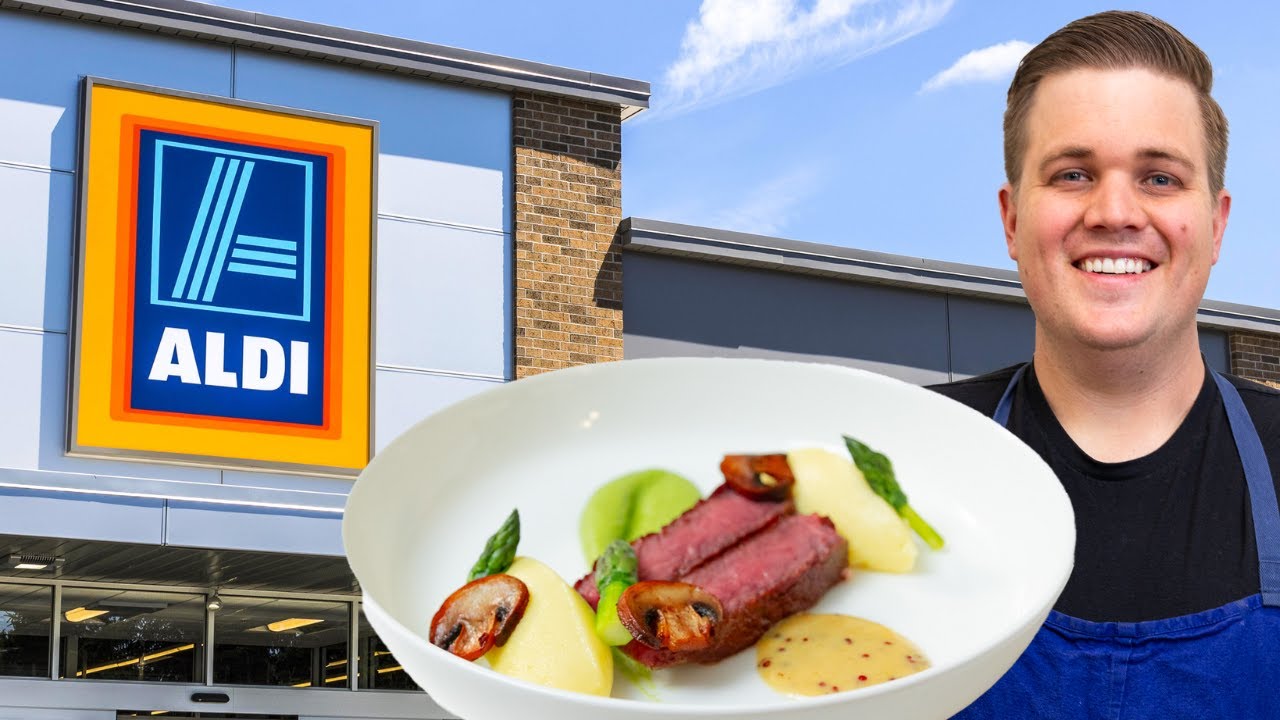
Parker Hallberg takes grocery store ingredients that most cooks write off as amateur hour and builds a tasting menu that would make sense at $45 a head. The technique here isn't flashy knife work or foam — it's the kind of flavor layering and plate composition that separates someone who can cook from someone who can actually run a menu. You watch him work and realize the real skill isn't having a $30,000 setup. It's knowing how to make ordinary ingredients sing in ways that justify the check average.

Eating at Le Bernardin. NYC. 3 Michelin Stars. An Amazing 8 Course $310 Tasting Menu
Eight courses of fish cookery at the temple of technique, where every protein gets the treatment it deserves and the room runs like Swiss clockwork. You're watching decades of knife work and sauce mastery condensed into two hours of service — the kind of precision that makes your own fish special look like a rough draft. Le Bernardin doesn't just serve dinner; they demonstrate what happens when classical French technique meets obsessive attention to every detail, from the brunoise to the final wipe. Anyone running protein knows exactly how hard it is to make this look effortless.
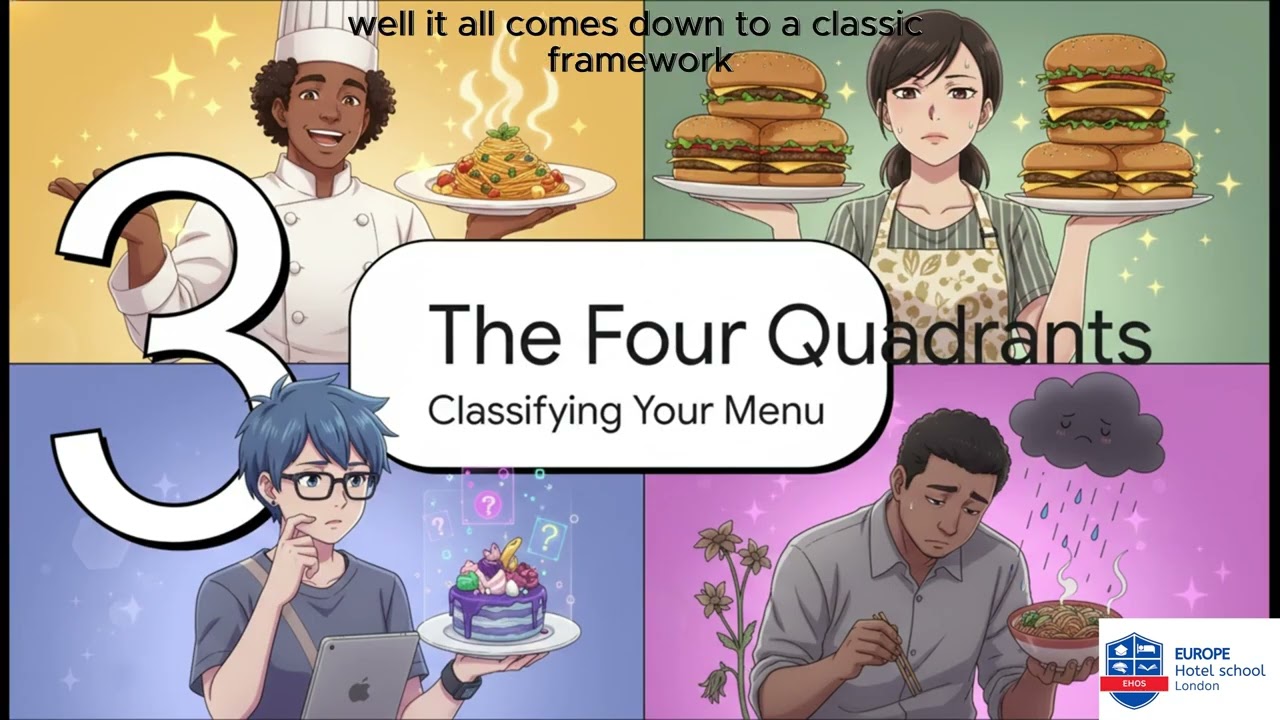
Concept Confirmation and Final Menu Engineering for Profitability
Menu engineering isn't about what you want to cook — it's about what pays the rent while keeping your standards intact. This breakdown strips away the romance and gets into the numbers that separate restaurants that last from those that don't. You're watching someone who understands that a properly engineered menu is as much craft as any sauce work, just with spreadsheets instead of saucepans. The math has to add up before the flavors can sing.
Restaurant Accounting | Hotel P&L | Restaurant Finance | Restaurant Expenses
The numbers don't lie, but they'll kill you if you don't know how to read them. Chef Bhandari walks through the P&L like someone who's actually had to explain why food costs spiked in week three — not just theory, but the kind of line-by-line breakdown that keeps the lights on. You're either running the numbers or the numbers are running you.
Top 15 Best Restaurants In miami
Fifteen restaurants, zero mention of what happens behind the pass to make any of it work. You'll see plenty of plated perfection and Instagram angles, but the real question is what these kitchens are actually executing night after night when the rail fills up. Anyone can curate a highlight reel. The craft is in the consistency.
It's not the whole picture, but it's the foundation. Beyond the math: menu layout and psychology. Where the eye goes first, how descriptions affect ordering, why the number of items per section matters.
Then the creative side — seasonal changes, trend integration, and how to evolve a menu without losing the identity that brought people in.
Menu design is where the creative and financial sides of running a restaurant meet. Cost Control covers the margin math behind every menu item. Street Food & Travel is where a lot of the best menu inspiration actually comes from — constraint and simplicity producing brilliant food.