Kitchen Systems & Workflow
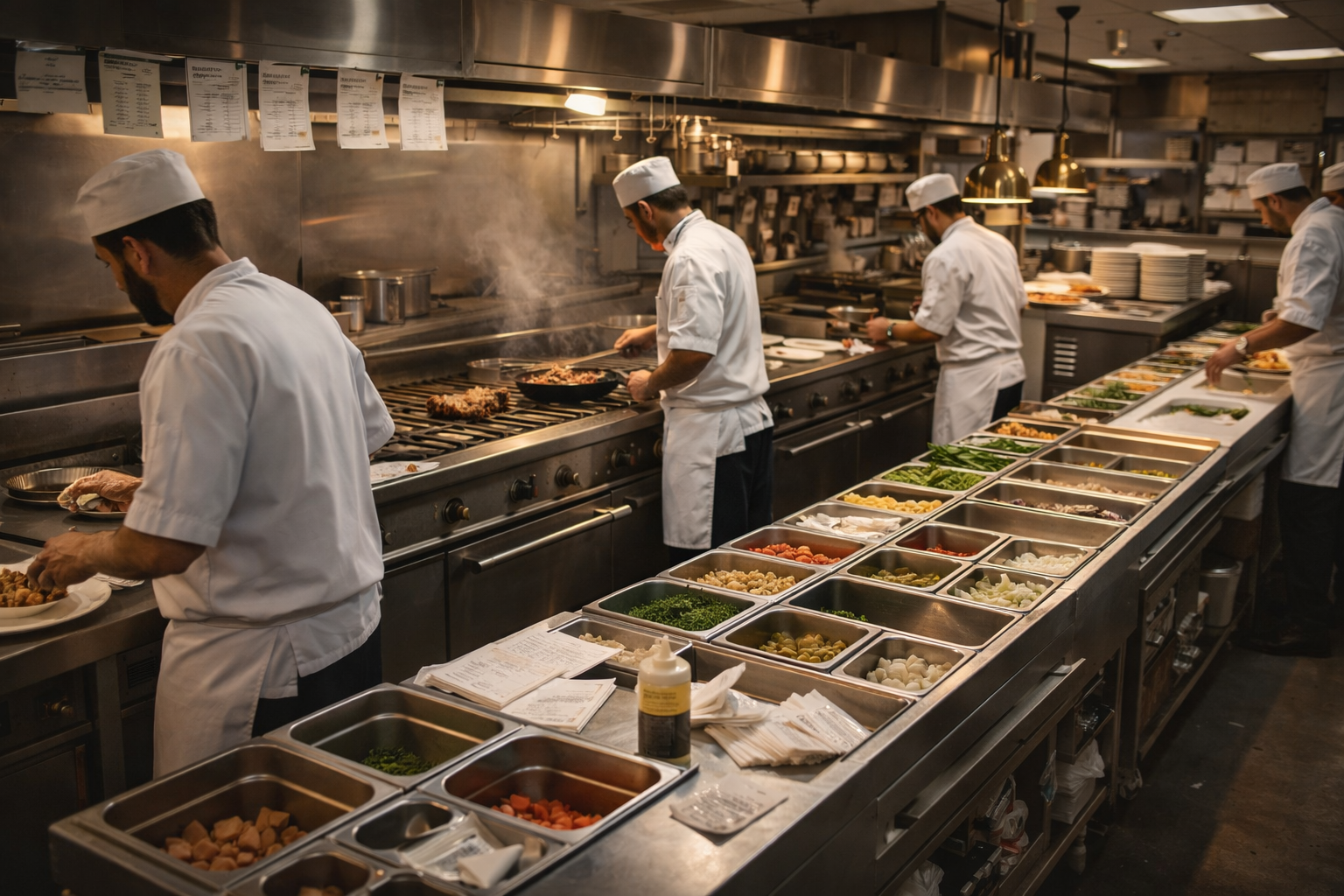
The best kitchen you ever worked in probably wasn't the most talented. It was the most organized. Every station set the same way every night.
Prep lists that told you what to do and in what order. A line check at the same time every day, no exceptions. Systems are what let a kitchen run when the chef isn't standing over it.
They're what make a new hire functional in days instead of weeks. They're the reason one restaurant survives a busy Saturday with two call-outs and another one falls apart. None of it is glamorous.
Prep lists, station maps, handoff protocols, cleaning schedules. But it's the difference between a kitchen that runs and a kitchen that lurches from one crisis to the next.
When the Chef Leaves, the Systems Leave Too
Most kitchens fail at systems the same way. The person who opened the place carries everything in their head — the prep order, the station layouts, the portion weights, the timing. It works because they're there every day.
Then they take a day off. Or they hire a sous chef and step back. Or they open a second location.
And suddenly nobody knows why the soup gets made before the stock, or what the correct portion weight for the salmon is, or how the morning crew is supposed to hand off to the evening crew. The knowledge was never written down because it felt unnecessary when the person who knew everything was always in the building. Writing it down is the work.
A prep list. A station map. A recipe book with actual weights.
It's not complicated, but it takes discipline to build and even more discipline to maintain.
When the Chef Leaves, the Systems Leave Too
Most kitchens fail at systems the same way. The person who opened the place carries everything in their head — the prep order, the station layouts, the portion weights, the timing. It works because they're there every day.
Then they take a day off. Or they hire a sous chef and step back. Or they open a second location.
And suddenly nobody knows why the soup gets made before the stock, or what the correct portion weight for the salmon is, or how the morning crew is supposed to hand off to the evening crew. The knowledge was never written down because it felt unnecessary when the person who knew everything was always in the building. Writing it down is the work.
A prep list. A station map. A recipe book with actual weights.
It's not complicated, but it takes discipline to build and even more discipline to maintain.
“The best kitchen you ever worked in wasn't the most talented. It was the most organized.”
How the Best Kitchens Actually Run
217 videosVideos on mise en place, kitchen organization, service flow, and the systems behind some of the most efficient operations in the world — from ramen shops to airline catering to Michelin-starred restaurants.

We Put 11 Cameras In NYC's Busiest Brunch Restaurant | Bon Appétit
Eleven cameras and they still can't capture the real story: how Clinton St. Baking Company moves 1,200 covers on a weekend with a kitchen the size of most walk-in coolers. You'll watch Neil Kleinberg's crew work a brunch rush that would break most operations and realize it's not about the pancakes — it's about the systems that let three cooks feed half of Manhattan without losing their minds. The money shot isn't the perfectly plated blueberry pancakes; it's watching how they've engineered every square inch of space to eliminate wasted motion when the tickets are printing faster than you can read them.

Your Restaurant Menu Is Probably Underpriced
You're either running the numbers or the numbers are running you. This breakdown cuts through the menu pricing guesswork that kills restaurants — showing you exactly how to cost recipes, track portions, and stop bleeding money on that lamb shank you thought was profitable. Anyone who's watched their food cost creep past 35% while wondering where the hell the money went needs to see this. The math isn't sexy, but neither is closing.

Terra Restaurant Manager (TRM) | Restaurant POS, Billing, Inventory, Tables & Accounting Software
You're burning money somewhere between your POS and your books, and you know it. Terra Restaurant Manager promises to plug those leaks — tracking every wing, every slice, every dropped ticket from order to close. The demo runs clean, but any operator worth their salt knows the real test comes when your Saturday night line is six deep and the system has to keep pace with the chaos.

Odoo POS | Restaurant Management System | Odoo18 Functional Video
You're drowning in paper tickets, hunting for inventory counts on three different clipboards, and your FOH manager is texting you about table turns while you're trying to fire six tops. This Odoo walkthrough shows what happens when your entire operation talks to itself — POS synced to inventory, labor costs updating in real time, kitchen display systems that actually display what matters. Anyone who's ever lost a Saturday night to a crashed system knows exactly why integration isn't just convenient, it's survival.

ANANTA RASOI TEAM BRIEFING BY CHEF DHEERAJ BHANDARI | Kitchen Team Daily BRIEFING
Chef Dheeraj breaks down the daily brief that separates kitchens that survive from ones that implode — every cook knows their station, every dish has its window, every service starts with everyone on the same page. You can taste the difference between a kitchen running blind and one where the chef actually talks to their team before the tickets start flying. This isn't motivation theater; it's the unglamorous work of making sure nobody walks into service wondering what the hell they're supposed to be doing.

kitchen Deep Freezer Guideline | Restaurant Startup | Restaurant SOP #chefdheerajbhandari #sop
The walk-in freezer isn't just cold storage — it's where profit margins live or die, and where health inspectors make their first judgments. Chef Dheeraj walks through the temperature zones, rotation protocols, and labeling systems that separate kitchens that last from those that fold in six months. You've seen what happens when someone treats the freezer like a junk drawer. This is how you don't become that cautionary tale.

Restaurant Staff Meeting | Cafe SOP | Cafe Chef Hiring | How to Start a Cafe in India
Chef Bhandari walks you through the machinery that keeps a café functioning — staff meetings that actually move the needle, SOPs that survive contact with reality, hiring conversations that cut through the bullshit. You can hear twenty years of opening shifts in how he frames each decision: not what sounds good in a business plan, but what works when you're three people down and the espresso machine decides to throw a tantrum. The kind of operational backbone that separates cafés that last from cafés that close after eight months of Instagram-worthy losses.

Restaurant Staff Meeting | Cafe SOP | Cafe Chef Hiring | How to Start a Cafe in India #chef
Bhandari walks his team through SOPs like someone who's actually had to fire a cook for not following them. The Hindi-English kitchen shorthand, the way he breaks down food costing without losing anyone — this is how you build systems that survive when you're not in the room. Anyone who's tried to scale past their first location knows exactly why he's drilling this into their heads.

An Hybrid POS System for Retail & Restaurants
You're running two revenue streams and your POS can't keep up — retail sales bleeding into food costs, inventory counts that make no sense, reports that tell you nothing about where the money actually goes. Pete walks through a hybrid system that tracks both sides without the usual workarounds that eat your margins. Anyone who's tried to reconcile a cafe's books at month-end knows exactly why this matters.

Restaurant Billing Software | POS, Table Management, Inventory & CRM | RestroPro
You're juggling six different systems to run one restaurant — POS that doesn't talk to inventory, scheduling software that ignores your actual covers, table management that's three clicks too slow when you're in the weeds. RestroPro promises to put it all in one place, and if it actually works the way they demo it, you might finally stop bleeding money on over-ordering and under-staffing. The real test isn't the features — it's whether your crew can actually use it when the rail is full and the printer won't stop firing.

Best Restaurant POS System for Restaurants & Takeaways (Full Demo)
You've seen every POS demo promise the moon — seamless integration, real-time everything, profits through the roof. This one actually shows you the guts: how orders flow from tablet to kitchen display, how inventory moves when you 86 something, how your food costs shift in real time when proteins spike. Anyone running more than 200 covers a night knows that three seconds saved on every order entry is the difference between smooth service and complete chaos.
DineOpen - Complete Restaurant Management Software Demo | POS, KOT, Staff App & More
You're either running the numbers or the numbers are running you, and most restaurant software tries to solve everything while actually solving nothing. DineOpen walks through the unglamorous truth: POS integration that doesn't crash during Saturday rush, KOT systems that actually talk to the kitchen, staff scheduling that accounts for the fact that people call out. This is what happens when someone builds software who's actually had to close a restaurant at 2 AM with a broken system and three hours of sidework left.

I Hosted a STRESS FREE DINNER PARTY and You Can Too | recipes and step by step instructions
Anyone who's run service knows the dinner party home cook and the line cook are playing the same game with different stakes. Erica breaks down the mise-en-place mentality for civilians — timeline everything backward from plating, prep what you can three days out, and never let your guests see you sweat. The systems she's teaching are the same ones that keep a 40-cover night from becoming a suicide shift. You're either working the plan or the plan is working you.

Chicken Schezwan Soup Recipe | Spicy Chinese Restaurant Style Winter Soup
Schezwan soup is the winter workhorse that keeps Chinese places alive when everyone else is hemorrhaging covers. You're looking at a $2.80 food cost that moves for $8.95, and the base holds for three days if you're not an idiot about storage temperatures. This isn't about authenticity — it's about a soup that actually fills people up and makes them sweat enough to forget it's 20 degrees outside. Build your mise right and one cook can push 40 bowls an hour during the lunch crush.

Lentil Muhammara Pasta
You're watching someone build a protein-forward plant dish that clocks 30 grams without touching meat or dairy — the kind of math that matters when half your tickets are asking for vegan options and your food cost is already bleeding. Muhammara base, red lentils for bulk, pasta for the dopamine hit. This is how you keep the plant-based crowd fed and happy without running a separate prep list.

Scan4Food Advanced Features | Smart QR Ordering, POS Billing & Restaurant Management System 🚀
You're drowning in paper tickets, inventory sheets scattered across the office, servers punching orders into a POS that crashed twice last week. Scan4Food wants to digitize your entire operation — QR ordering, real-time inventory tracking, integrated billing that talks to your kitchen display system. The demo looks clean, the features comprehensive, but anyone who's watched a "revolutionary" restaurant tech rollout knows the real test isn't the sales pitch. It's whether your night crew can still push covers when the wifi drops at 7 PM on a Friday.

Building a complete restaurant/hotel management system
You can spend forty grand on a POS system that crashes during your busiest Saturday, or you can watch a developer build restaurant management from scratch in fourteen days. The brutal honesty here isn't in the code — it's realizing how many "industry-standard" solutions are just expensive band-aids on problems someone could solve with basic logic. Every feature they're building, you've probably cursed the absence of while trying to track inventory at 2 AM.

Episode #19. Mise en Place, How to set up your station like a Pro!!
The difference between a cook who survives their first month and one who gets cut after three shifts comes down to this: your station is either an extension of your hands or it's working against you. ChefAuthorized breaks down the system that turns chaos into muscle memory — how to set your mise so you're not hunting for that sixth pan while tickets pile up on the rail. You've seen the alternative: sauce splattered everywhere, reaching across your body for basic tools, everything you need somehow always behind you.
Design Your Own Restaurant Concept -Part 6 - Service Flow, Floor Plan Examples and Exercise
You've got the concept, you've run the numbers, now comes the part that separates the dreamers from the operators — designing a floor plan that actually works when you're in the weeds. Lora Haun walks through service flow like someone who's watched good restaurants die from bad layouts, showing you how to map guest movement and kitchen workflow before you're stuck with 30 seats you can't turn and a pass that backs up every Friday night. The difference between a restaurant that hums and one that hemorrhages money often comes down to inches — how far your expo walks, where you put the POS, whether your servers can actually move when it gets busy.
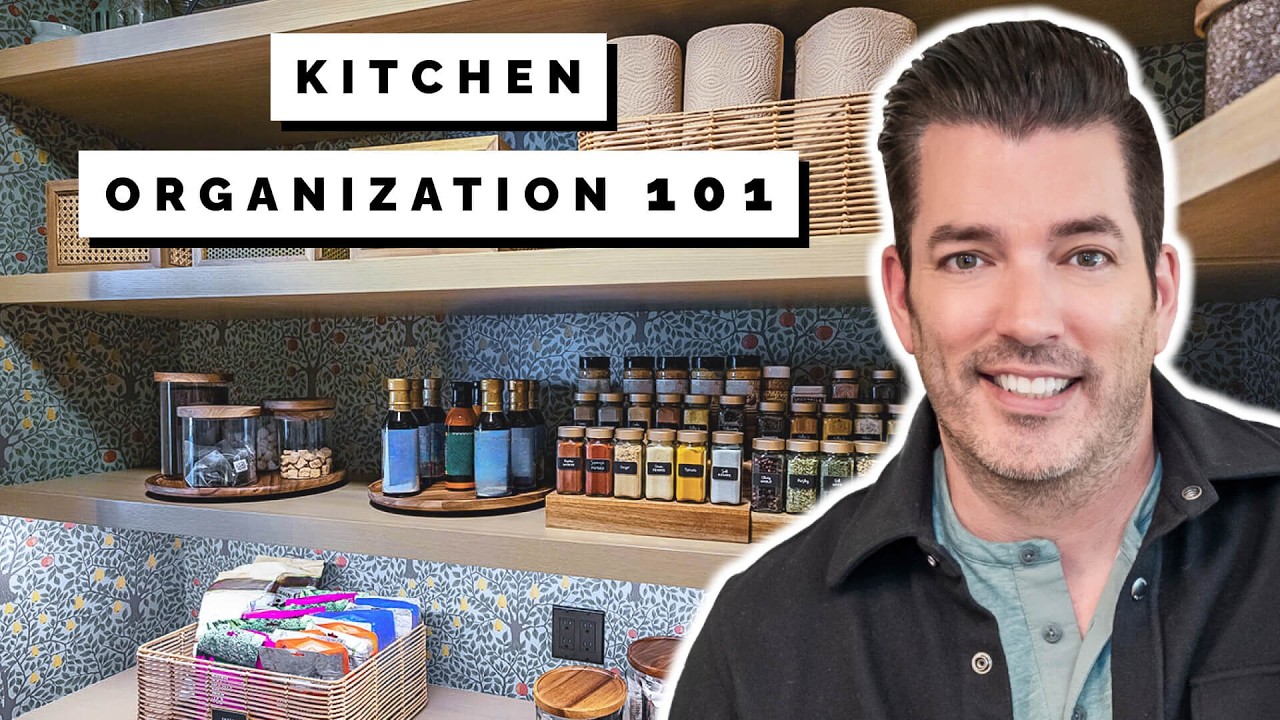
👉 Kitchen Organization Ideas You’ll Wish You Knew Sooner (Jonathan’s Secrets Revealed!)
The home cook who's serious about mise en place is basically running a one-person kitchen — same principles, smaller scale. Jonathan's got that obsessive organization gene that separates the weekend warriors from the people who actually understand that chaos in your workspace equals chaos on your plate. You're watching someone who gets that every second saved reaching for the right tool is a second you can spend on technique. The math works whether you're plating for two or two hundred.

Scan4Food Complete Tutorial || Digital Menu, Billing, POS & Restaurant Management
You're running paper tickets in 2024, manually counting inventory with a clipboard, and wondering why your food costs are bleeding you dry. Scan4Food walks you through their complete system — digital menus that talk to your POS, real-time inventory tracking, and the kind of data visibility that turns guesswork into actual management. The tutorial moves fast through integration, billing workflows, and the dashboard that shows you exactly where your margins live and die. Either you control your numbers or they control you.

How THIS Restaurant Maintained 3 Michelin Stars for 21 Years
Twenty-one years of three stars isn't luck or marketing — it's the kind of obsessive consistency that breaks most people before they ever get close. Blumenthal built something that outlasts trends, outlasts staff turnover, outlasts the inevitable moments when you want to burn it all down and open a taco truck. You watch this and realize maintaining excellence is harder than achieving it. The real question isn't how they got the stars, but how they kept showing up when the weight of expectation could crush a lesser kitchen.
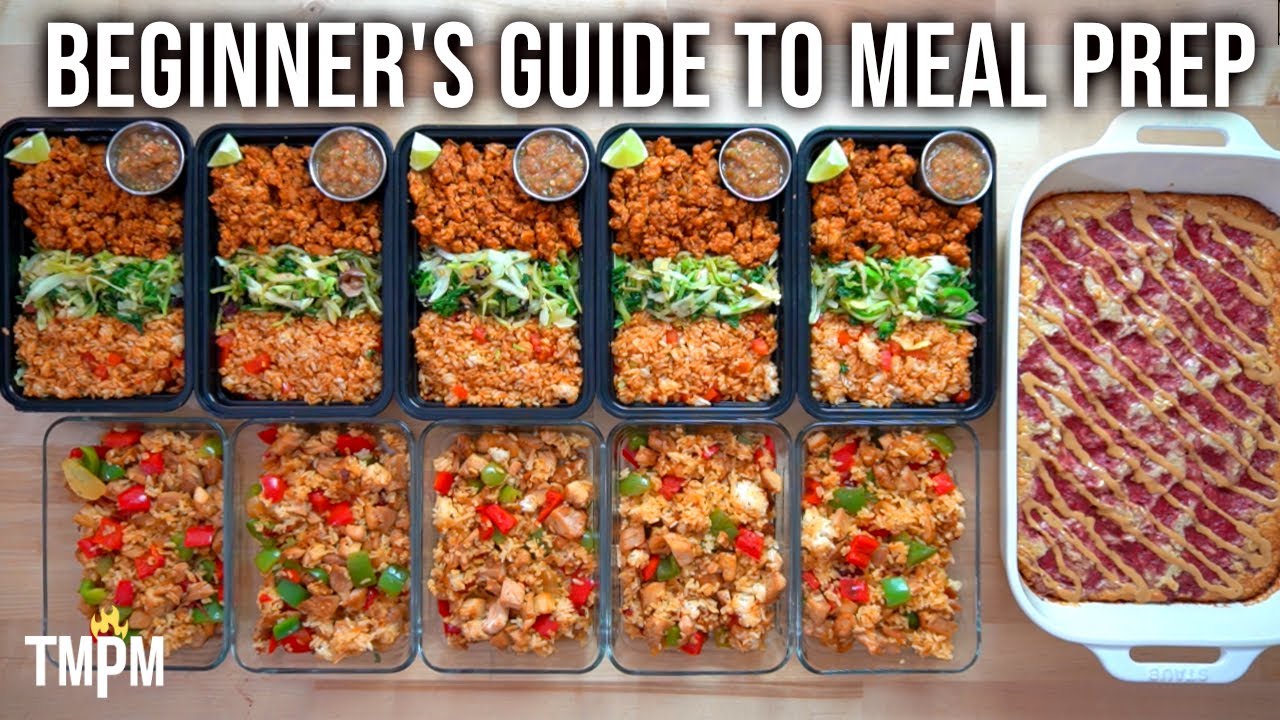
How to Become a Meal Prep Pro this Year | The Beginner's Guide to Meal Prep
Cortis breaks down meal prep like he's training a new prep cook — portion control, proper storage, mise en place at home. The fundamentals don't change whether you're feeding a family or feeding the masses. You know those Sunday prep sessions that keep your week from falling apart? Same principles, different scale.

Kitchen Pantry Organization Ideas Using Ikea Organizers In An Unexpected Way (Kitchen Organization)
You've got 47 seconds to find that #10 can of tomatoes during a Friday rush, and your walk-in looks like a crime scene. This home cook figured out how to turn $30 worth of Ikea bins into a system that actually makes sense — the kind of visual organization that means your prep cook isn't playing hide-and-seek with inventory when the rail starts singing. Strip away the Pinterest aesthetic and what's left is pure operational logic: everything has a place, every place has a label, and nothing disappears into the black hole behind the rice bags.
A station map so any cook can set any station without asking. A recipe book with portion weights, plating specs, and production quantities that lives in the kitchen and gets used. Beyond those three: a cleaning schedule that assigns responsibility by name, not assumption.
A handoff protocol between shifts. A line check that happens at the same time every day. None of this requires software.
It requires someone to sit down and write it out, and then enforce it until it becomes culture.
Systems affect everything downstream. The money side lives in Cost Control — poor workflow is usually the root cause of food cost problems. The human side lives in Staff & Leadership — systems only work if people follow them, and people only follow them if they're trained and managed well.